
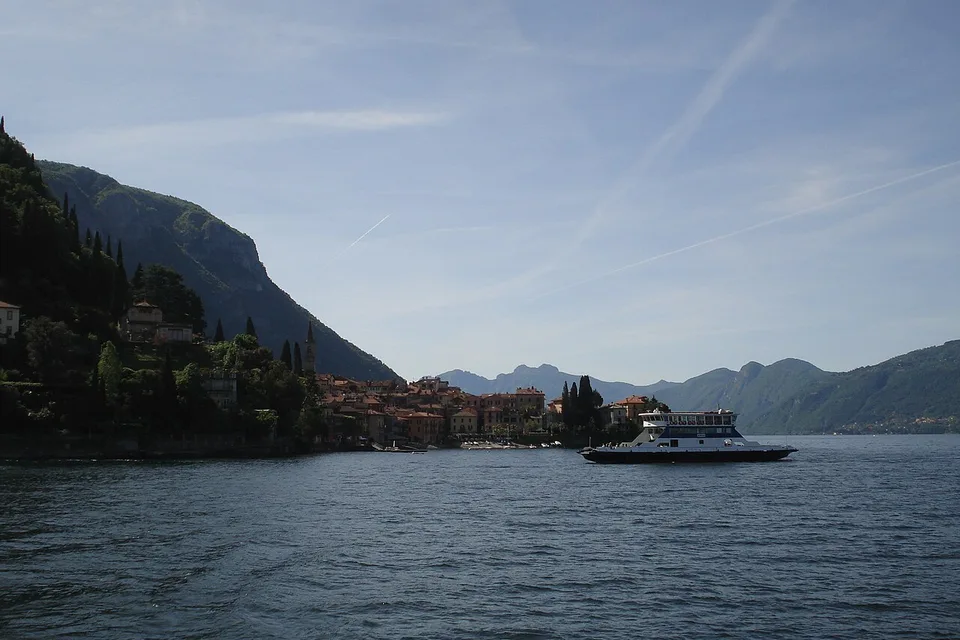
Choose the gateway before choosing the village
Como and Varenna put you on different parts of the lake. Search the complete outward and return journey for your date, including the walk between railway station and ferry pier. A place that looks nearby across the water may still require a seasonal boat connection.
01 / Start with the rail map
Choose Como or Varenna as the gateway
| Gateway | Works well for | Check before booking |
|---|---|---|
| Como | Como city, the south-western shore and a simple city day. | The exact Como station and the walk to your chosen pier. |
| Varenna | Varenna and central-lake boats to Bellagio or Menaggio. | The boat timetable and the uphill route to accommodation. |
Trenord publishes a dedicated Milan–Como San Giovanni route page. Use its journey search for the travel date rather than copying a sample duration into the plan. For Varenna, search the exact station name Varenna-Esino and verify the return shown.
02 / Make the base do useful work
Pick a base that survives a missed boat
Como is the safer base when you want city services, a straightforward rail return to Milan and a waterfront day that does not depend on crossing the lake. Varenna is useful when central-lake villages are the priority and the accommodation is manageable from the station.
Bellagio and Menaggio have no railway station. They can still work without a car, but arrival and departure depend on a boat or bus. Check the final connection before committing to a flight or fixed long-distance train on the same day.
03 / Build a boat day
Use the official ferry timetable in both directions
Navigazione Laghi publishes separate seasonal tables for the long Como–Colico service and the central-lake links between Bellagio, Cadenabbia, Varenna and Menaggio. Start on the official Lake Como ferry page and select the date before deciding how many villages fit.
Ordinary and fast services do not always stop at the same places or use the same supplement. Save the departure pier, service type and a later workable return. In summer and on holidays, allow time for the ticket queue and boarding instructions.
04 / A day from Milan
Keep a first day trip deliberately small
Como city plus its waterfront is the simplest plan. Varenna plus one central-lake crossing can also work when the seasonal timetable gives you more than one reasonable return. Trying to combine Como, Bellagio and Varenna in a short winter day creates unnecessary risk.
If the lake sits beside a flight day, first identify MXP, LIN or BGY in our Milan airport guide. The airport transfer and lake railway may use different Milan stations.
05 / Keep the day reversible
Do not make one final sailing the whole plan
Wind, weather, seasonal schedules and service notices can change a boat day. A useful fallback is a walk in the village where you already have rail access, followed by an earlier train. Check railway notices as well as lake notices before leaving.
Our Italy rail disruption guide explains how to match an alert to the operator and train you intend to use.
06 / Before travelling
Lake Como checklist
- I know my exact railway station and ferry pier.
- I checked the boat timetable for the date and direction.
- I saved one later workable return.
- The walk to accommodation works with my luggage.
- I have a rail-based fallback if boats change.
- I checked ticket and validation rules for each operator.
Use the Italy train-ticket guide for station names, regional tickets and validation.
Sources checked on . This guide explains a planning method rather than live departures. Verify trains, boats, fares and service notices for the travel date.