
Use public transport to narrow the map
Start with places connected by one railway or a dependable bus from your base. A village that is close on the map can still require a change at a roadside stop and an early final service.
01 / Choose the trip you can operate
Separate city Tuscany from countryside Tuscany
Florence, Pisa, Lucca, Arezzo and several other towns fit naturally into a rail itinerary. Hill villages, vineyards and rural stays may need a local bus, pre-arranged transfer, guided day or a longer stay. Both versions can work without driving, but they use different plans.
The official Visit Tuscany rail overview identifies Florence as the main regional rail hub and lists direct corridors to places including Pisa, Lucca, Siena and Arezzo. Confirm the exact departure in the operator journey planner for your date.
02 / Choose a base
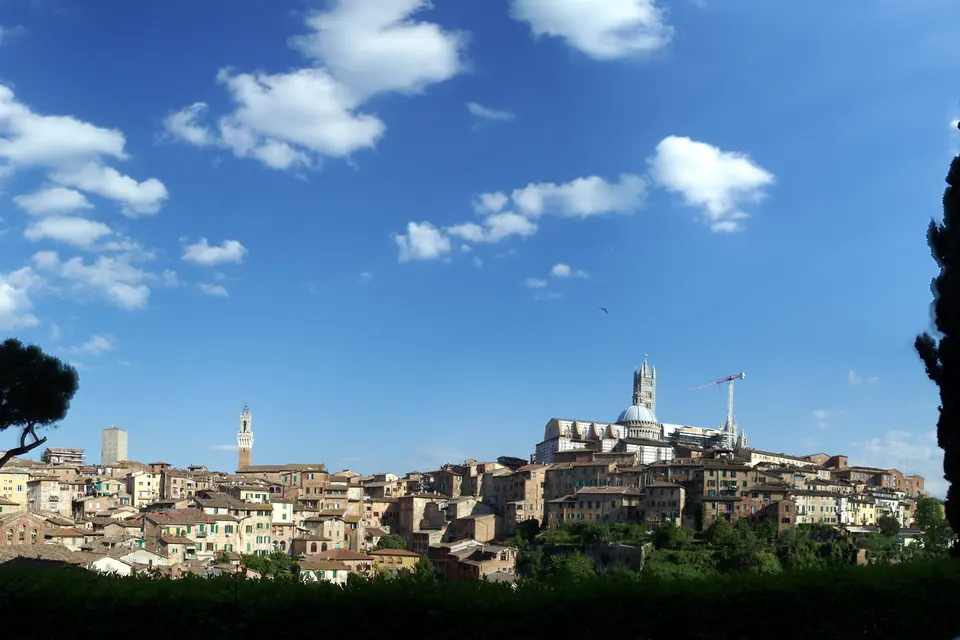
Florence for connections, Siena for a slower stay
| Base | Works well for | Trade-off |
|---|---|---|
| Florence | Fast rail connections and several independent day trips. | The city deserves its own days; do not leave every morning. |
| Siena | A compact historic stay and bus links into its province. | Some onward journeys are slower or require another hub. |
Before booking, map the route from the arrival stop to the actual accommodation entrance. Siena is hilly, and the railway station is not the same thing as being at your hotel in the historic centre.
03 / Let the railway do the easy work
Choose one rail town per day
Pisa suits a focused visit to the cathedral complex; Lucca suits a day around the walls and old town. Arezzo offers another city day on the main rail network. Our Pisa or Lucca guide compares the station walks and explains why one city is usually the better first plan than collecting both.
Use our Italy train-ticket guide to check station names, regional ticket rules and changes. Leave the timetable in the official planner rather than copying a sample time from a blog into your itinerary.
04 / Add the countryside deliberately
Check the last bus before choosing the village
Visit Tuscany explains that regional buses extend the rail network to places without stations. Its getting-around guide is a useful map of the options; the operating timetable still comes from the named transport company.
Search the outward and return directions separately, with the correct weekday or holiday date. If the return depends on one late bus, make the visit an overnight stop, reserve a transfer or choose another town. Seasonal heritage trains are experiences for their operating dates, not an everyday countryside network.
05 / Keep the week coherent
A manageable first plan
Give Florence two or three full days, add one rail day to Pisa or Lucca, then move to Siena for two nights if a slower historic base matters to you. Add one countryside day only after its return journey is confirmed. This gives the region room without changing hotels every morning.
On travel days, check current operator notices. Our Italy rail disruption guide explains how to identify the affected operator and any guaranteed services.
06 / Before travelling
Tuscany checklist
- My main bases work for the trips I actually want.
- I know the exact station or bus stop for each outing.
- I checked the final return on the correct calendar date.
- I allowed for hills and luggage between stop and accommodation.
- I have not treated a seasonal service as a daily connection.
- I kept at least one uncommitted day for Florence or Siena.
Sources checked on . This guide describes a planning method rather than live departures. Verify timetables, stops, fares and service notices for your dates.